Smart drugs · Explainer
What Is Modafinil? A Plain Explanation of the Wakefulness Drug
A prescription wakefulness medicine approved for sleep disorders, used off-label for focus. Not an amphetamine, not a magic pill. Here is what it actually is.
Razumna · 9 min read · Updated June 2026
The short answer
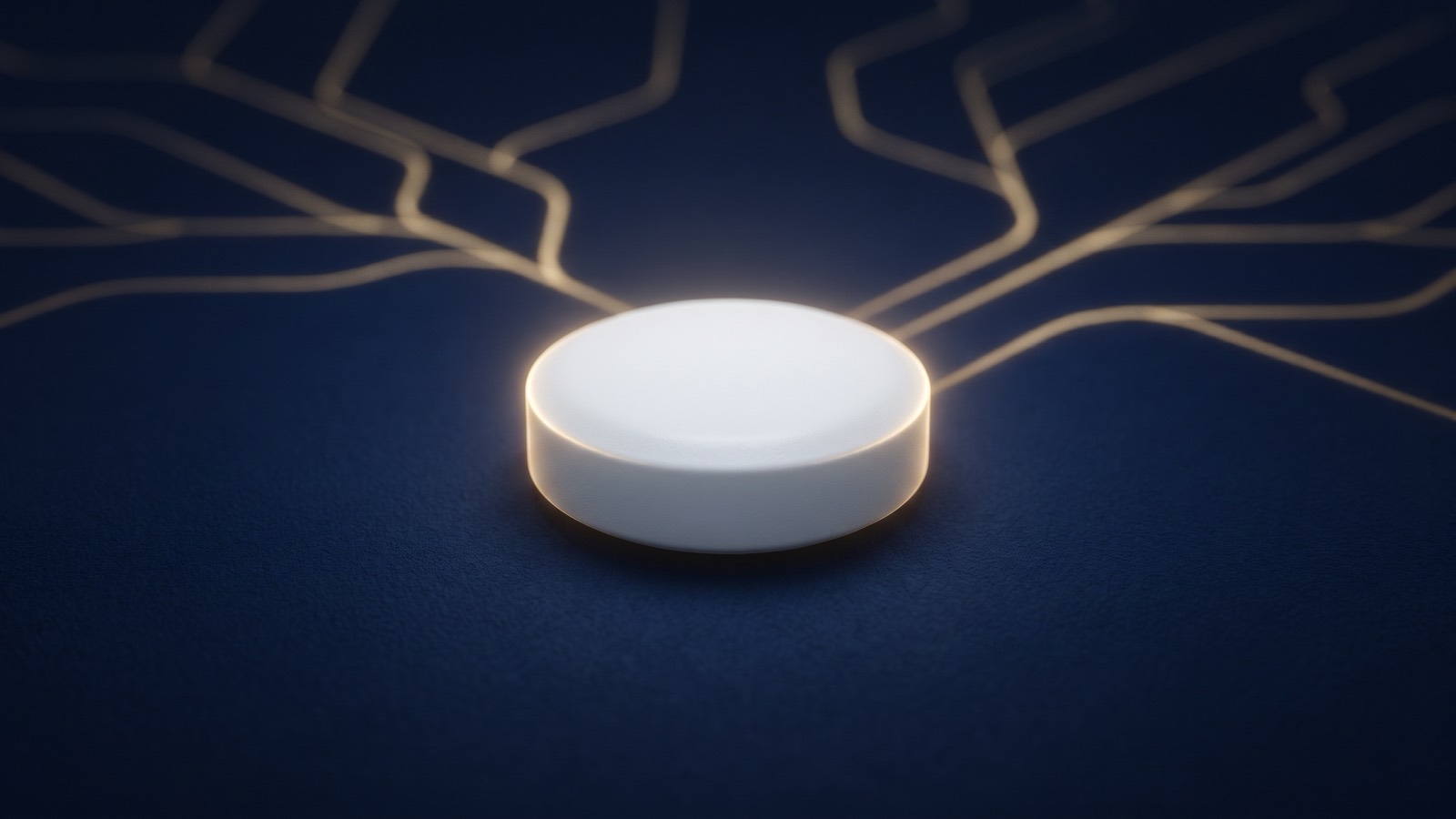
Modafinil is a prescription wakefulness-promoting medicine, a eugeroic, first developed in France in the 1970s and approved by the FDA in 1998 for narcolepsy, later for shift work sleep disorder and obstructive sleep apnoea. It is not an amphetamine and does not work like one. Off-label, people use it for sustained focus and alertness. It is a single morning tablet that holds a 12 to 15 hour wakefulness window. It does not add knowledge or raise intelligence; it extends the window you can stay alert and attentive.
What modafinil is, briefly
Modafinil is a prescription wakefulness-promoting medicine. The technical label for its class is eugeroic, which simply means a compound that promotes wakefulness without the broad nervous-system stimulation of an amphetamine. It is taken as a single tablet, usually 100mg or 200mg, once in the morning, and one dose holds a long wakefulness window of roughly 12 to 15 hours. That is the whole drug in a sentence: a once-daily tablet that holds back fatigue for most of a day.
Where it came from
Modafinil was developed by the French company Lafon Laboratories in the late 1970s, out of work on a related compound called adrafinil, of which modafinil is the active breakdown product (Modafinil overview). It was first used clinically in France in the 1980s and approved by the US Food and Drug Administration in 1998 under the brand Provigil. Its longer-acting half, armodafinil, was approved later, in 2007, as Nuvigil. So this is not a new or experimental compound; it has decades of clinical use and a well-characterised safety profile behind it.
What it is approved for
Modafinil is formally approved to improve wakefulness in 3 conditions: narcolepsy, shift work sleep disorder, and excessive sleepiness associated with obstructive sleep apnoea (FDA Provigil label). In the European Union, a 2011 regulatory review narrowed the approved use to narcolepsy alone (EMA). Those are the on-label uses. The reason most people have heard of modafinil has little to do with any of them.
The off-label use everyone actually means
Outside its sleep-disorder approvals, modafinil is widely used off-label for sustained focus and alertness through long or demanding days. A systematic review of healthy, non-sleep-deprived users found consistent improvements in attention and executive function, particularly on more complex tasks, without a clear pattern of added side effects or mood changes in the studies reviewed (Battleday and Brem, 2015). Off-label means used outside the approved indication, not unstudied. This is information, not a recommendation to self-prescribe.
Who actually uses it
3 broad groups. The first is the approved one: people with narcolepsy and other diagnosed sleep disorders, for whom modafinil is a prescribed treatment to stay awake during the day. The second is shift workers, also an approved use, who use it to stay functional through night and rotating schedules that fight the body clock, covered in modafinil for shift work. The third, and the largest by reputation, is off-label: students, engineers, traders, and founders using it for stamina through long, demanding days. The honest line between these groups matters. For the first two, modafinil addresses a genuine medical problem. For the third, it is a focus tool with real limits and no claim to make anyone smarter, which is where most of the misunderstanding sits.
What modafinil is not
3 corrections, because this is where the hype lives. It is not an amphetamine and does not work like one; it raises the dopamine signal modestly rather than flooding it, which is why it lacks the surge-and-crash profile of a classic stimulant. It is not a study drug that pours knowledge in; it extends the window you can hold focus, and a longer focus window on material you have not learned still produces nothing. And it is not the fictional pill the films sell; the honest map of what is real and what is not is in the real limitless pill. The mechanism behind all of this is in how modafinil works.
Modafinil and armodafinil
You will see both names. Modafinil is a 50/50 mix of 2 mirror-image molecules; armodafinil is only the longer-lived half, isolated. In practice 150mg of armodafinil tracks roughly to 200mg of modafinil and holds a slightly higher level into the afternoon. Neither is stronger in any meaningful sense; they run on different clocks. The full comparison is in the modafinil and armodafinil guide.
Tablets, brands, and forms
Modafinil tablets come in fixed strengths, most often 100mg and 200mg, sold under blister brands such as Modalert from Sun and Modvigil from HAB; armodafinil most commonly appears as Artvigil. The strength is printed and consistent, which is what makes accurate dosing possible. Razumna ships the tablet line direct with same-day dispatch, from India, where transit usually runs 7 to 10 days. Payment is crypto only, across 12 coins at 10% off, with no card option, and smart-drug orders include a free sample of 10 Modafinil plus 10 Armodafinil.
Modafinil and adrafinil
One name that comes up alongside modafinil is adrafinil, the older compound it was derived from. Adrafinil is a prodrug: the body converts it into modafinil, so the active drug is the same, just reached by a slower, less direct route that also loads the liver more. For practical purposes modafinil is the cleaner, more predictable version of the same effect, which is why it largely replaced adrafinil in clinical use. If you see the two treated as interchangeable, that is roughly fair on the active drug, but modafinil is the more refined tool.
Does it work if you are not sleep-deprived
A common doubt: does modafinil do anything for a well-rested person, or only paper over lost sleep? The systematic review of healthy, non-sleep-deprived users found genuine gains in attention and executive function, strongest on harder, more complex tasks (Battleday and Brem, 2015). So the effect is not only a sleep-deprivation patch. The honest qualifier is that the benefit is real but bounded, a sharper, longer focus window, not a transformation, and it is most useful when the task actually demands sustained attention.
Is modafinil safe to use
The short, honest answer is that modafinil has a comparatively clean safety profile for short-term use in healthy adults, with decades of clinical history, but clean is not the same as harmless. The common side effects, headache, reduced appetite, dry mouth, and disrupted sleep if dosed late, are mild and dose-related for most people. The 2 things to take seriously are rare but real: serious skin and hypersensitivity reactions reported for the class, where a new rash is a hard stop, and the way modafinil masks sleep debt rather than removing it, which is the genuine long-term risk of leaning on it daily. It can also reduce the effectiveness of hormonal contraception. The full breakdown is in the side effects guide. None of this is a reason for alarm; it is a reason to treat it as the prescription medicine it is rather than a casual supplement.
Modafinil among the smart drugs
Modafinil is the most studied and most reached-for of the wakefulness compounds, but it is not the only tool, and it is not always the right one. It is a long, flat all-day window. A racetam like phenylpiracetam is a shorter, sharper push you cycle hard. Caffeine is a cheaper, blunter version of the same wakefulness idea on a much shorter clock. Where each fits is mapped in nootropics for focus. Picking modafinil should be a choice about the shape of the day you need, not a default because it is the famous one.
What to realistically expect, and the limits
Modafinil is a wakefulness tool, not an intelligence one. It extends and stabilises attention; it does not add knowledge, lift IQ, or replace sleep, which it masks rather than repays. Common side effects are headache, reduced appetite, dry mouth, and disrupted sleep if dosed late, covered in the side effects guide; rare but serious skin reactions have been reported for the class, and a new rash means stop and seek medical care. It is a prescription medicine whose legal status varies by country, set out in the legality guide, response varies between people, and Razumna makes no first-dose guarantee. This is information, not medical advice.
Products in this note
Common questions
What is modafinil used for?
It is approved to improve wakefulness in narcolepsy, shift work sleep disorder, and obstructive sleep apnoea. Off-label, it is widely used for sustained focus and alertness through long days. It is a prescription medicine, not a supplement.
Is modafinil a stimulant?
Not in the amphetamine sense. It is a eugeroic, a wakefulness-promoting compound that raises the dopamine signal modestly rather than flooding it. That is why it lacks the rush and crash of a classic stimulant.
Is modafinil the same as Adderall?
No. Adderall is an amphetamine that forces dopamine and noradrenaline out; modafinil works mainly through mild dopamine-transporter inhibition and the brain's own wakefulness systems. They are different categories of drug.
Does modafinil make you smarter?
No. It extends the window you can hold focus and resist fatigue. It does not add knowledge or raise intelligence. It is a multiplier on effort, and a multiplier on nothing is still nothing.
Sources
- Modafinil overview: class, history, approval, pharmacology (Wikipedia)
- PROVIGIL (modafinil) prescribing information: approved indications (FDA)
- EMA recommends restricting the use of modafinil to narcolepsy, 2011 (European Medicines Agency)
- Battleday RM, Brem AK. Modafinil for cognitive neuroenhancement in healthy non-sleep-deprived subjects, 2015 (PMID 26381811)
This article is information, not medical advice. Razumna does not name compounds as treatments for any condition.
Keep reading
Smart drugs
How Modafinil Works: The Mechanism in Plain Language
Comparison
Modafinil vs Armodafinil: A Practical Comparison
Smart drugs
The Real Limitless Pill: What Actually Exists, and What Does Not
Smart drugs
Modalert 200: What It Is, Whether It Is Real Modafinil, and How to Use It
Smart drugs
Adrafinil: The Modafinil Prodrug, How It Converts, and Why the Liver Bit Matters